The attempt needs to teach something
Repetition becomes satisfying when the next attempt contains a new idea. Perhaps you noticed a safer position, understood an enemy cue or found a cleaner sequence through a room. The failure has changed what you will do. Without that change, another try can feel like paying the same cost again. The games in this route differ in what they let you carry forward.
Keep the experiment close
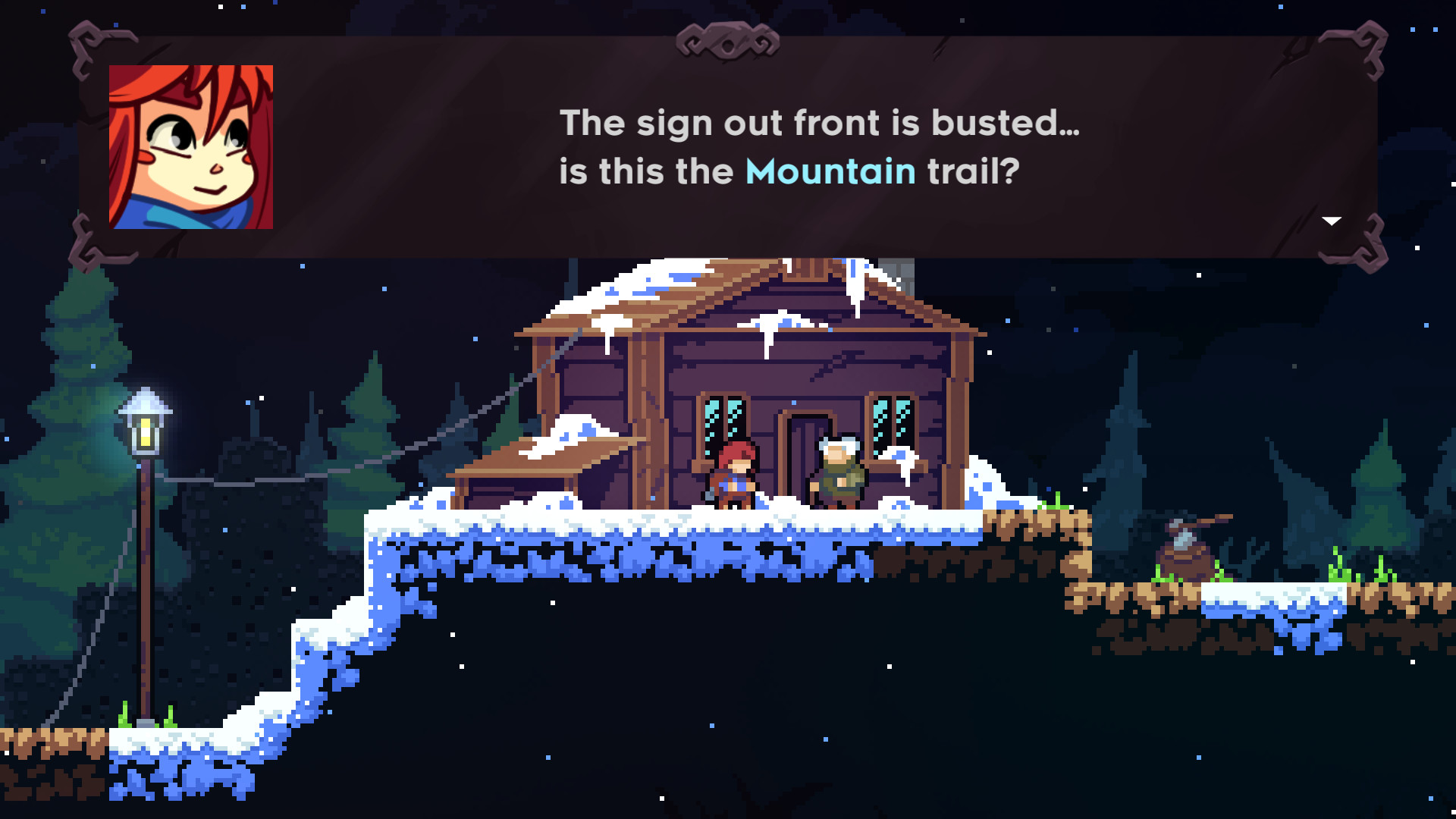
Celeste frames demanding movement in short spaces. A room can become a small study: where to jump, when to dash, what to save for the final stretch. The closeness of the next attempt makes observation useful immediately. Assistance is not outside that process. Adjusting the demands can help isolate the movement you actually want to learn.
Give the return another meaning
Hades places a social world between its escape attempts. Returning can bring a conversation as well as another chance. Dead Cells puts more emphasis on how movement, equipment and route choices change the feel of a run. Both make repetition variable, but they offer different reasons to welcome it. Choose according to whether you want a continuing cast or a brisk mechanical reinvention.
Change attention before increasing effort
Sifu and Sekiro reward reading an exchange rather than simply acting faster. A room or opponent that feels overwhelming may become clearer when you stop trying to solve every part at once. Notice one opening. Practice one response. This is an editorial way into them, not a promise that their difficulty disappears. They remain demanding games, and deciding that their particular demand is not for you is useful information.
Know when the lesson has stopped
If each attempt feels identical, pause. Return later with a narrower question or use an available assist. The next game on your list might offer a better relationship between effort and feedback. A discovery site should help you find a kind of practice you enjoy, not persuade you to prove something. Save a note about what you learned; it is a better starting point than a record of how often you failed.
Editorial approach & sources
This is original editorial interpretation, not a scored review or a claim of personal playtesting. Game facts are grounded in the official listings linked below.